Positioned well north of the Arctic Circle between the 67th and 69th parallels, the Lofoten archipelago juts out into the turbulent waters of the Norwegian Sea like an unbroken alpine spine. Often termed the "Lofoten Wall" (Lofotveggen) when viewed from the mainland, these ancient granite and gneiss massifs rise sheer from cold ocean fjords to elevations exceeding 1,000 metres. Further northeast lies Tromsø, the historic launchpad for historic polar expeditions and the premier commercial hub of Arctic Norway.
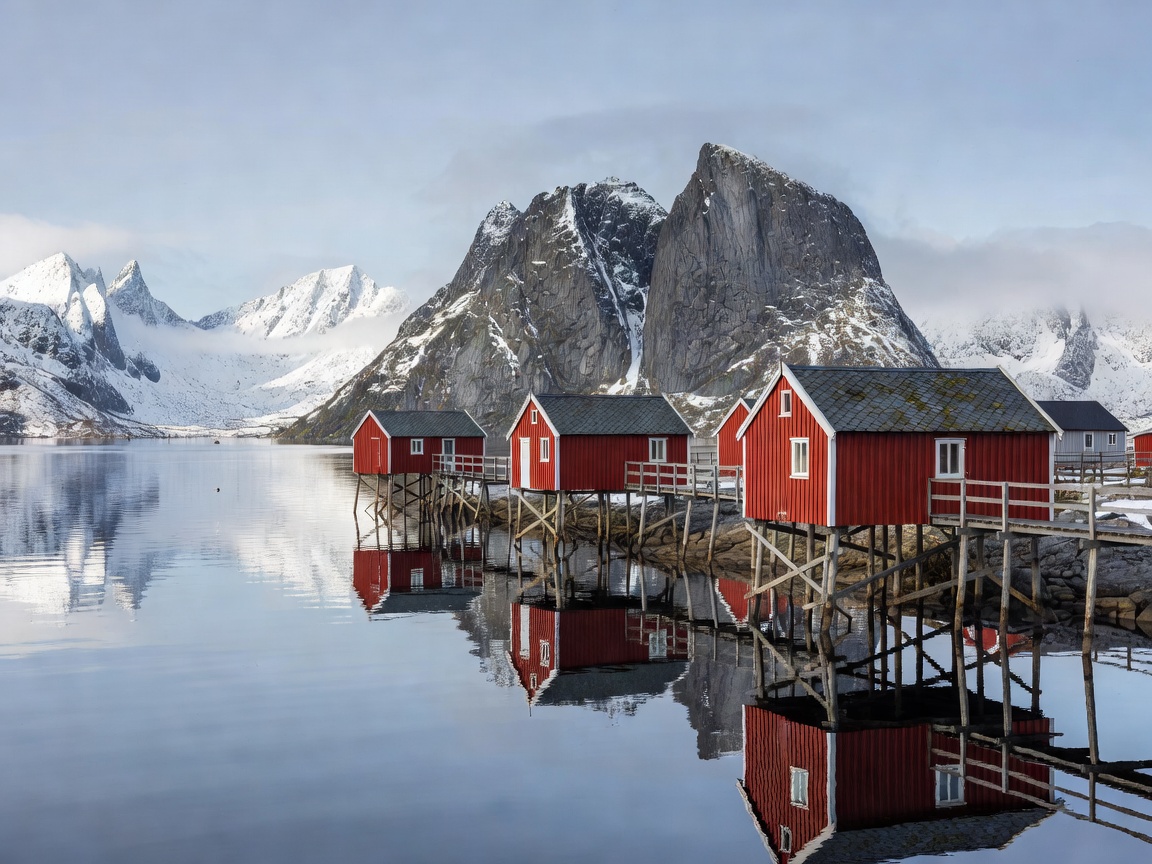
Geographic Structure of Lofoten
The primary archipelago consists of five interconnected major landmasses: Austvågøya, Gimsøya, Vestvågøya, Flakstadøya, and Moskenesøya, alongside the isolated southern outposts of Værøy and Røst. Traced by the European route E10, these islands are connected through an engineering network of submerged sea tunnels, cantilevered bridges, and single-lane causeways.
Historically sustained by the seasonal Arctic cod (skrei) migration that arrives from the Barents Sea between January and April, Lofoten balances an operational commercial fishing economy with global adventure tourism. Waterfront timber structures known as rorbuer—originally erected as rudimentary seasonal lodging for migrant fishermen—have been methodically restored across Hamnøy, Reine, Henningsvær, and Nusfjord to serve as travellers' accommodations.
Key Settlements and Iconic Landmarks
- Henningsvær: Often described as the "Venice of Lofoten," Henningsvær spans several rocky islets linked by low arched bridges. It is home to contemporary art installations at KaviarFactory and an internationally recognized football pitch bordered directly by cod-drying wooden racks (hjell).
- Reine and Hamnøy: Located in Moskenesøya, this inner fjord basin features dark basalt peaks encircling sheltered sea channels. The stone staircase to Reinebringen—constructed using Sherpa masonry techniques—features 1,560 granite steps ascending to a 448-metre ridgeline view over the entire Reinefjord network.
- Nusfjord: One of Norway’s oldest and best-preserved fishing hamlets, Nusfjord operates as a living open-air architectural museum documenting maritime cod processing and coastal trading.
Arctic Hub: Tromsø & Beyond
Positioned approximately 400 kilometres north of Lofoten, Tromsø occupies Tromsøya island within an expansive fjord setting. Known as the "Gateway to the Arctic," Tromsø houses the Polar Museum, documenting Roald Amundsen and Fridtjof Nansen's Arctic traverses, and the Arctic Cathedral (Ishavskatedralen), renowned for its triangular aluminium-clad facade reflecting glacial aesthetics.
The Gulf Stream Phenomenon
Despite resting between 68° and 69° North, coastal Northern Norway enjoys an anomalous maritime climate due to the North Atlantic Current. Sea harbours in Lofoten and Tromsø remain ice-free year-round, and coastal winter temperatures average between -2°C and 2°C, significantly warmer than inland continental regions at identical latitudes in Canada or Siberia.
Travel Season Comparison: Polar Winter vs. Midnight Sun
| Feature | Midnight Sun Season (June–August) | Polar Night & Winter (November–March) |
|---|---|---|
| Solar Illumination | 24 hours of continuous sunlight; no night darkness. | 0 to 4 hours of civil twilight; sun below horizon. |
| Primary Pursuits | Alpine ridgeline hiking, ocean kayaking, beach camping. | Aurora viewing, ski touring, whale safaris, dog sledding. |
| Road Conditions | Dry asphalt; high camper van density on narrow E10 sections. | Compacted snow and black ice; studded tyres legally mandatory. |
| Accommodation Dynamics | High occupancy across rorbuer; advance reservation required. | Steady aurora demand in Tromsø; quiet periods in outer Lofoten. |
Pros and Cons of Self-Driving vs. Public Transit
Advantages of Rental Vehicles
Lofoten's most iconic trailheads (Haukland, Ryten, Kvalvika) and coastal viewpoints lack frequent scheduled bus service. A private vehicle enables rapid repositioning when chasing localized weather breaks or seeking dark sky clearings during aurora displays.
Transit & Driving Challenges
The E10 is narrow with frequent single-lane bridges controlled by passing places. Parking areas at popular beaches fill early in summer, and winter driving requires experience managing crosswinds and black ice on coastal bridge spans.
Crucial Hiking Safety on Arctic Ridges
Arctic maritime weather changes with severe rapidity. Hikers ascending Reinebringen, Festvågtind, or Ryten must observe established alpine guidelines:
- Never hike on exposed granite ledges in driving rain; wet moss and lichen create extremely slippery footing on 40-degree gradients.
- Carry windproof and waterproof outer layers regardless of clear morning skies. Ocean tempests can develop within thirty minutes.
- Stick strictly to designated stone pathways to prevent tundra vegetation erosion on delicate sub-arctic slopes.